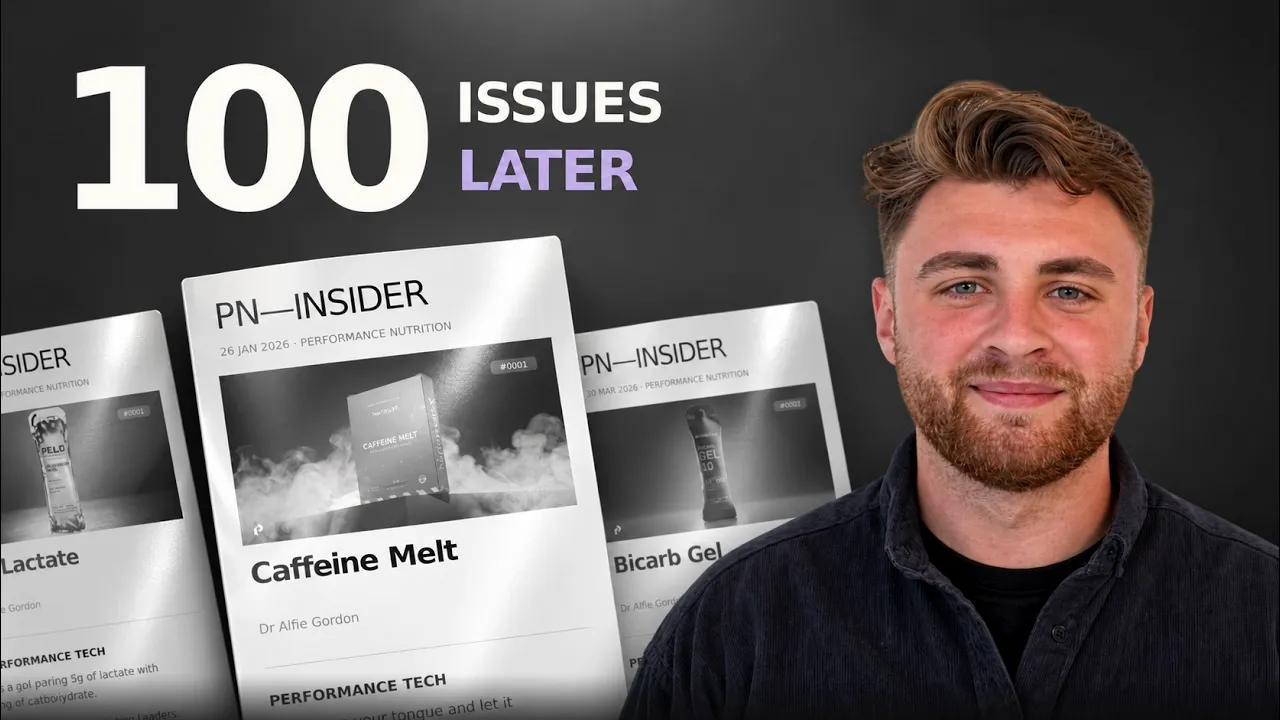
Every Monday, ~1000 sports nutrition leaders — at top-flight football clubs, international federations, WorldTour cycling teams, and the industry’s leading brands — open an industry briefing in their inbox.
The latest research that landed on PubMed last week. Every senior hire at an elite organisation. The trade press, the product launches, and new jobs at pro teams. A featured product, highlighted for practitioners.
The entire content operation is one person and a fleet of AI agents.
This is what that actually looks like.
Eleven agents, one shared database
The agents live in Hyperagent. They write to a single Airtable base called Pulse — four tables, all connected — and they brief me in Slack throughout the week.
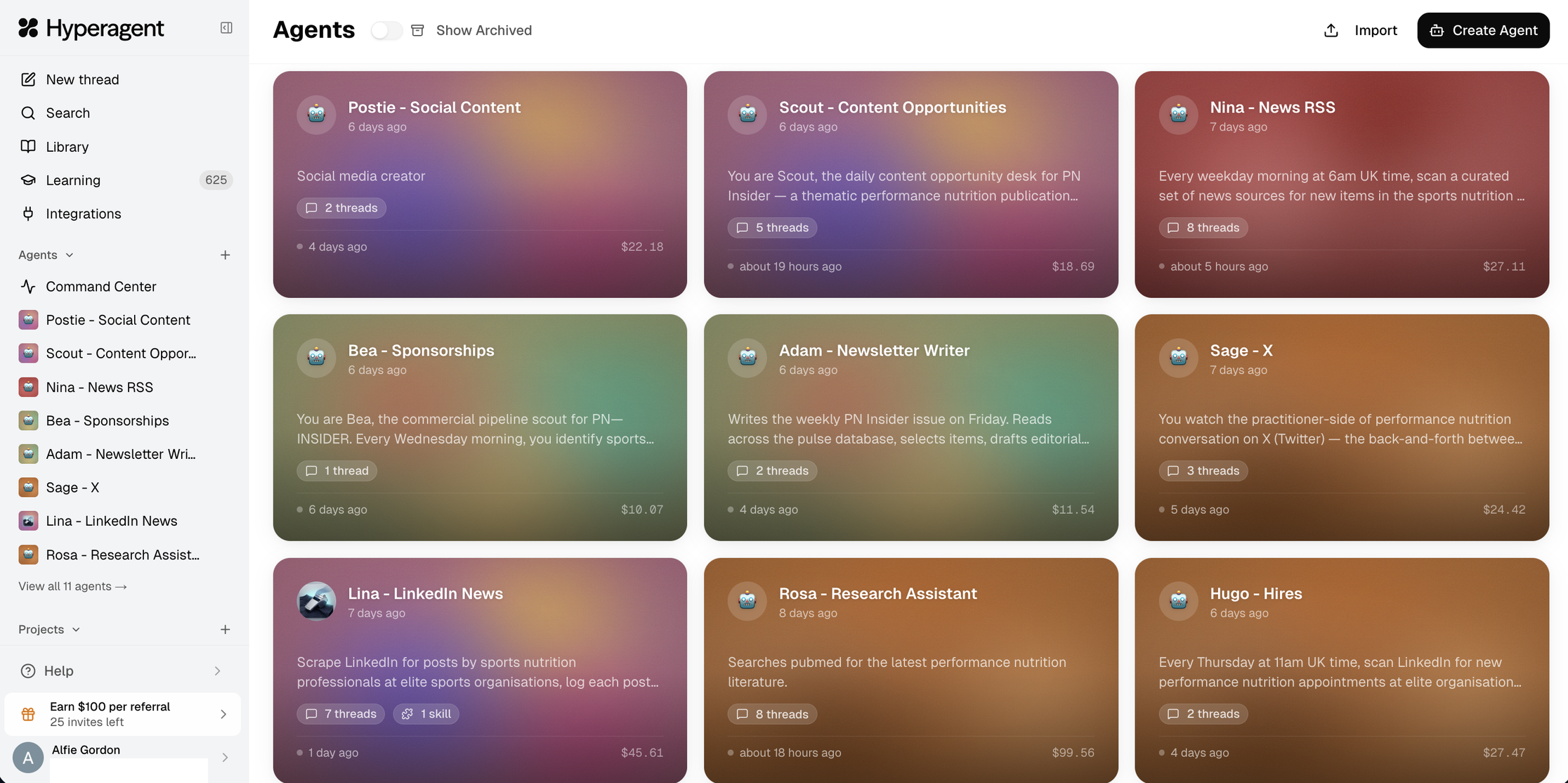
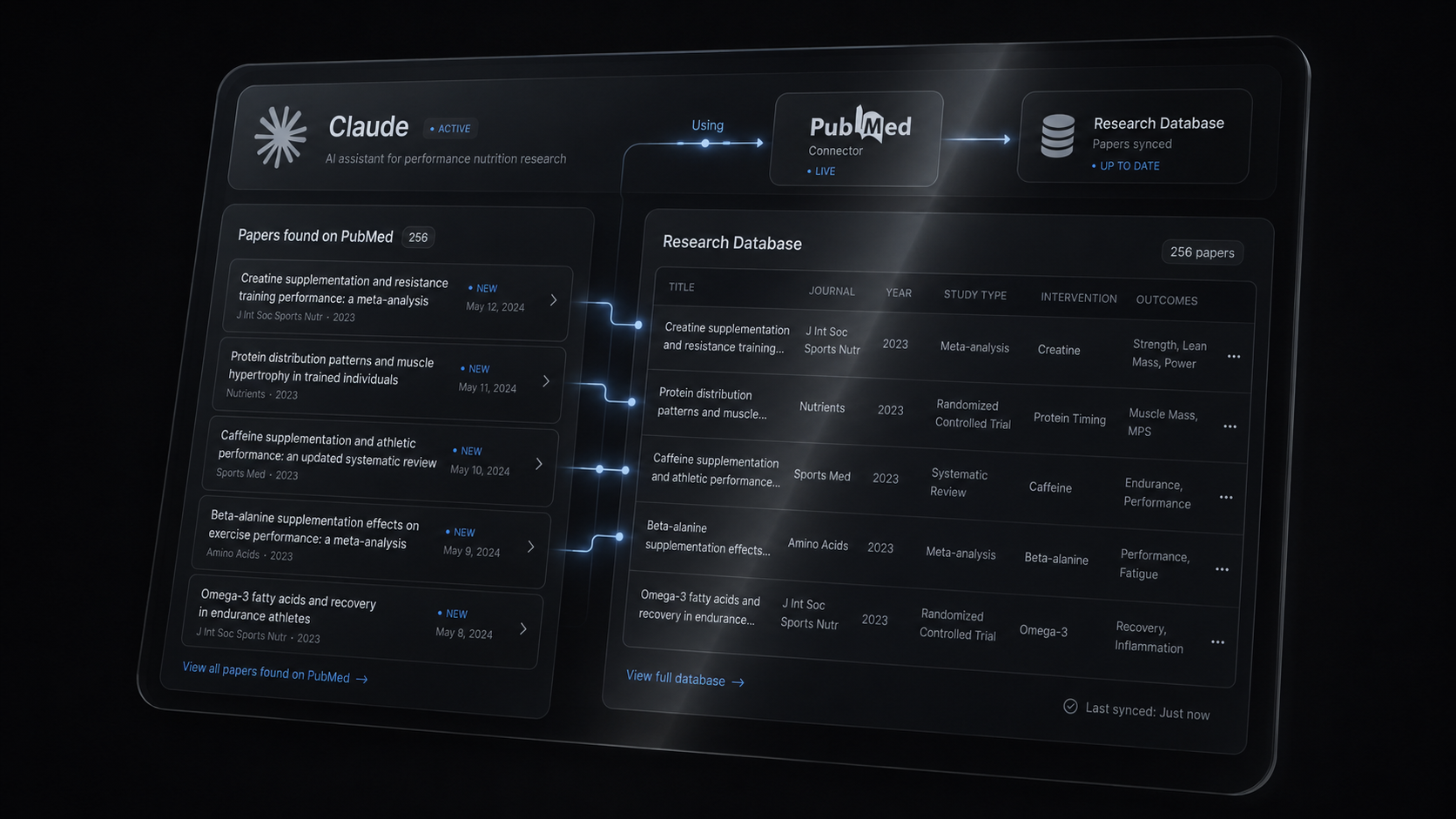
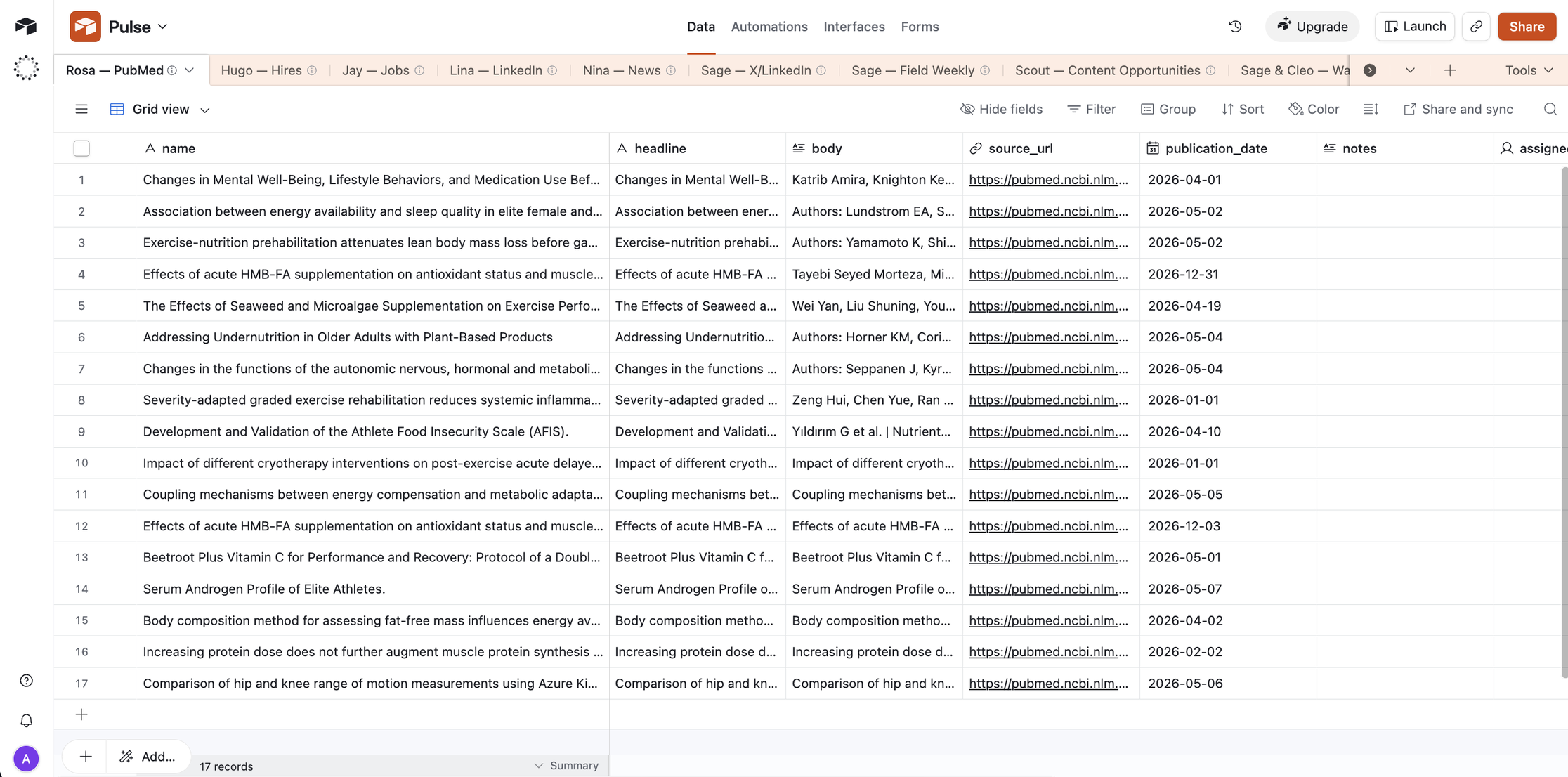
Rosa runs every week. Rosa queries PubMed across ten topical sports nutrition searches, filters for human-only adult studies, deduplicates against the last fortnight, and logs anything new to the research table.
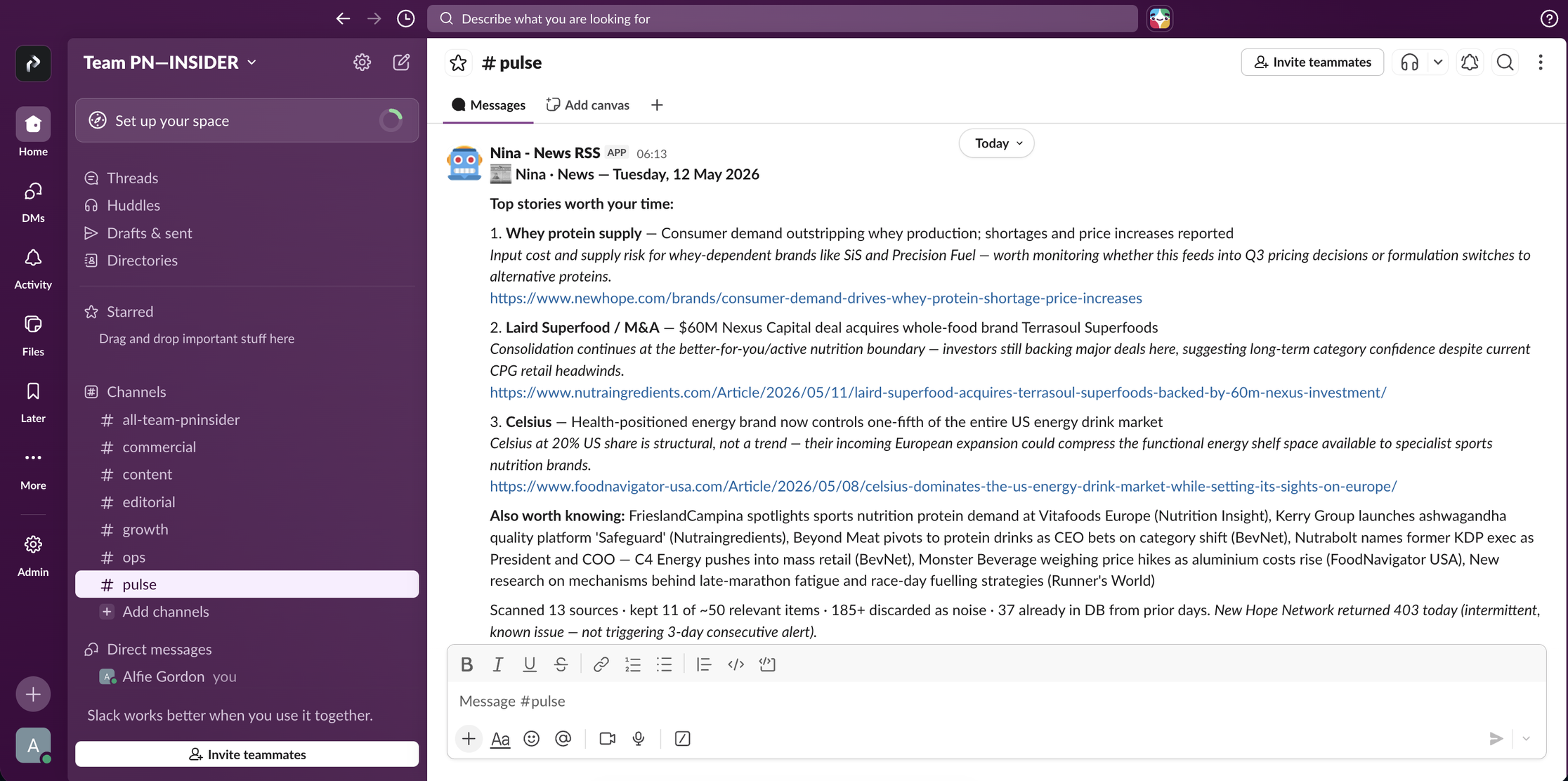
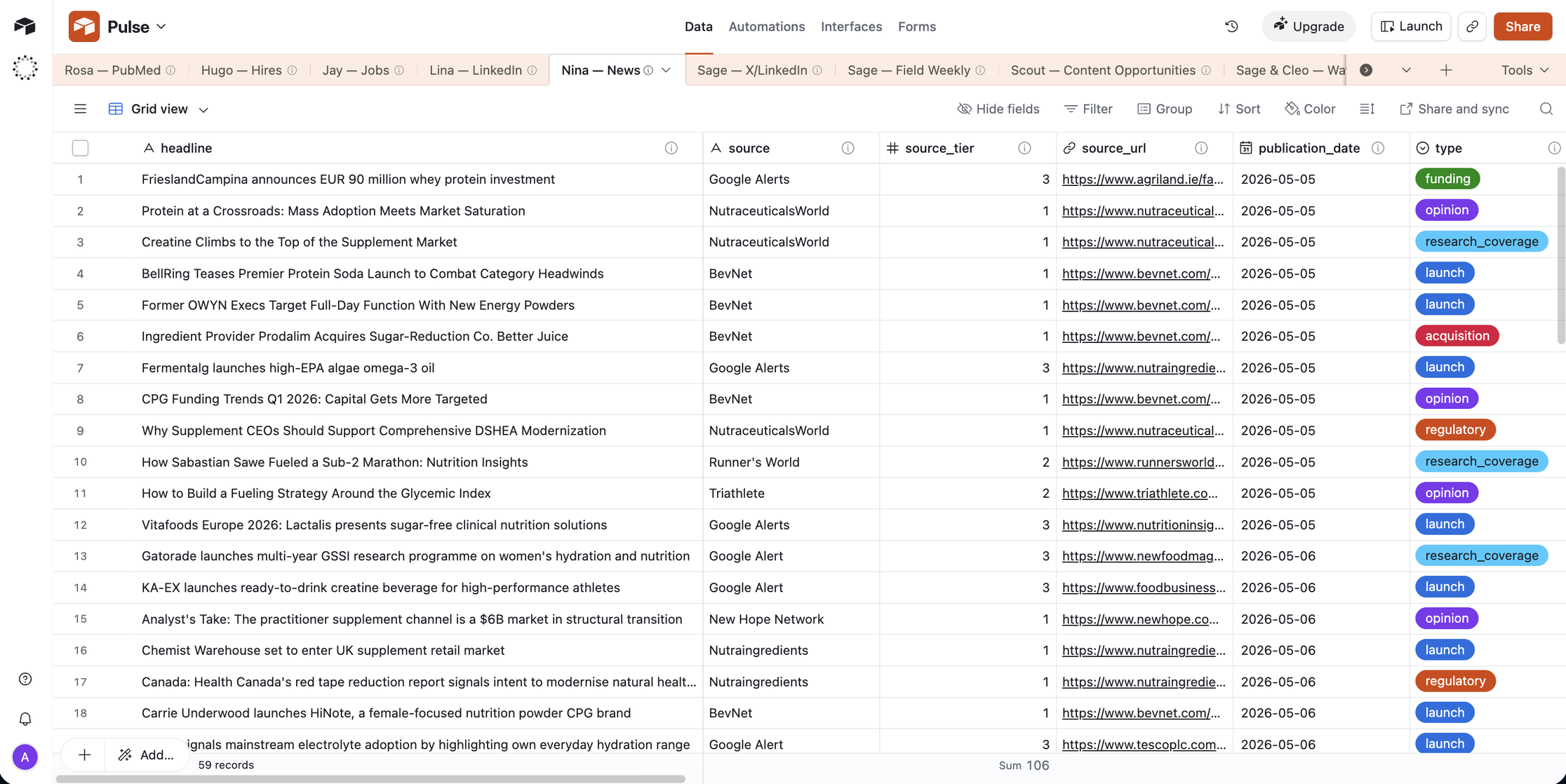
Nina scans the trade press at 6am UK time, plus a curated Google Alerts feed covering brand keywords. Nina classifies each item by type (launch, funding, partnership, regulatory, acquisition), scores commercial significance, writes a one-sentence “why this matters” angle, and posts a daily news briefing to Slack.
Hugo scans LinkedIn every Thursday for new performance nutrition appointments at elite organisations.
Lina tracks what practitioners themselves are posting on LinkedIn. Sage watches the scientist and brand-leader conversation on X. Scout sits across all of that as the daily content opportunities desk, asking “is there something here worth a quick post?”
Bea runs every Wednesday morning. Bea identifies sports nutrition brands with active buying signals — funding rounds, marketing hires, product launches, regulatory filings — scores them, and delivers a top-five commercial pipeline to a private Slack channel.
Adam writes the newsletter every Friday. Adam pulls from every table, applies the editorial rules, and ships a finished HTML draft to my inbox.
Postie takes the published issue and drafts five LinkedIn posts for the week ahead — pre-CTA, post-CTA, news, hires, research. All formatted.
A little more, by email.
Personal notes on science, AI and the things I’m making. Straight from me to your inbox.
Slack is the control panel
Every agent posts to Slack. Some daily, some weekly. The channels are organised by function — #pulse for intelligence briefings, #editorial for newsletter drafts, #content for the LinkedIn batch.
I treat Slack as the daily interface to the whole operation. I can dig into Airtable if I need further information. The database fills up underneath without me touching it.
Each agent runs on a schedule. Monday to Friday only. The agents skip Slack on weekends so I’m not tempted to work.
If an agent fails — an Apify scraper breaks, an RSS feed goes down, a query returns suspiciously empty — it posts a yellow alert to Slack rather than silently degrading.
Why Hyperagent
I’ve tried other platforms. Make, n8n, Claude Cowork. They all work.
I stuck with Hyperagent for two reasons. The first is that it’s simple. Each agent is a system prompt and a schedule. Anyone reading the prompt can understand what the agent does.
The cognitive overhead of maintaining the fleet is low enough that I can run eleven of them without it becoming a second job.
I’m not pretending I built this from scratch — I’m using a tool that lets me focus on the editorial logic instead of the orchestration.
Other platforms will be better suited to other use cases. If you need deep integration with niche APIs, n8n is probably the move. If you want maximum control, build it yourself.
For running a publication, where the work is essentially “read sources, classify, summarise, write, deliver” — Hyperagent has been the right level for me.
This is only the research and content side. There’s a whole second half I haven’t built yet — agents for interviewing practitioners, collecting primary data from the field, and ultimately showcasing more people’s talents.
The information exists. The talent exists. Most of it never reaches the people who’d benefit from knowing about it.
That’s the work for the next few months.
A little more, by email.
Personal notes on science, AI and the things I’m making. Straight from me to your inbox.
What this means
A weekly publication at this scope should require a small team. Editorial lead, contributors, social manager, researcher, analyst.
One person with the right architecture can now run a publication that looks, from the outside, like a media operation with multiple staff. The agents don’t replace the editorial judgment — I still pick the angle, edit the draft, make the calls — but they do replace almost every other layer underneath it.
Google has started surfacing the named author and platform behind content in search citations. As AI makes content abundant, the identifiable operator behind it becomes the unit of trust. Which means the person who can credibly own a body of work that previously required a team is now in a category that didn’t exist twelve months ago.
The wider point: most operators and practitioners I know are spending hours every week doing exactly this kind of work by hand. Searching PubMed. Skimming trade press. Tracking who’s moved where on LinkedIn. Copying findings into a doc, pasting into ChatGPT or Claude for a summary, pasting the summary somewhere else, formatting it for whoever needs it next.
Offload vs Surrender
Everyone’s using AI. The em-dash police on LinkedIn can do this manually if they want. You can also hand-calculate energy expenditure and update it every time an athlete trains an hour longer than planned — or you can let compute handle it.
We’re all using it. The actual question is whether you’re surrendering your thinking to it, or offloading the work around your thinking.
Agents can be the second thing. They collapse the manual courier work between sources and output so you can spend your time on the part that’s actually yours: the judgement.
The information exists. The unnecessary part is moving it between systems by hand.
Try for yourself
If you’d like some help with this:
https://dralfiegordon.com/
A little more, by email.
Personal notes on science, AI and the things I’m making. Straight from me to your inbox.